
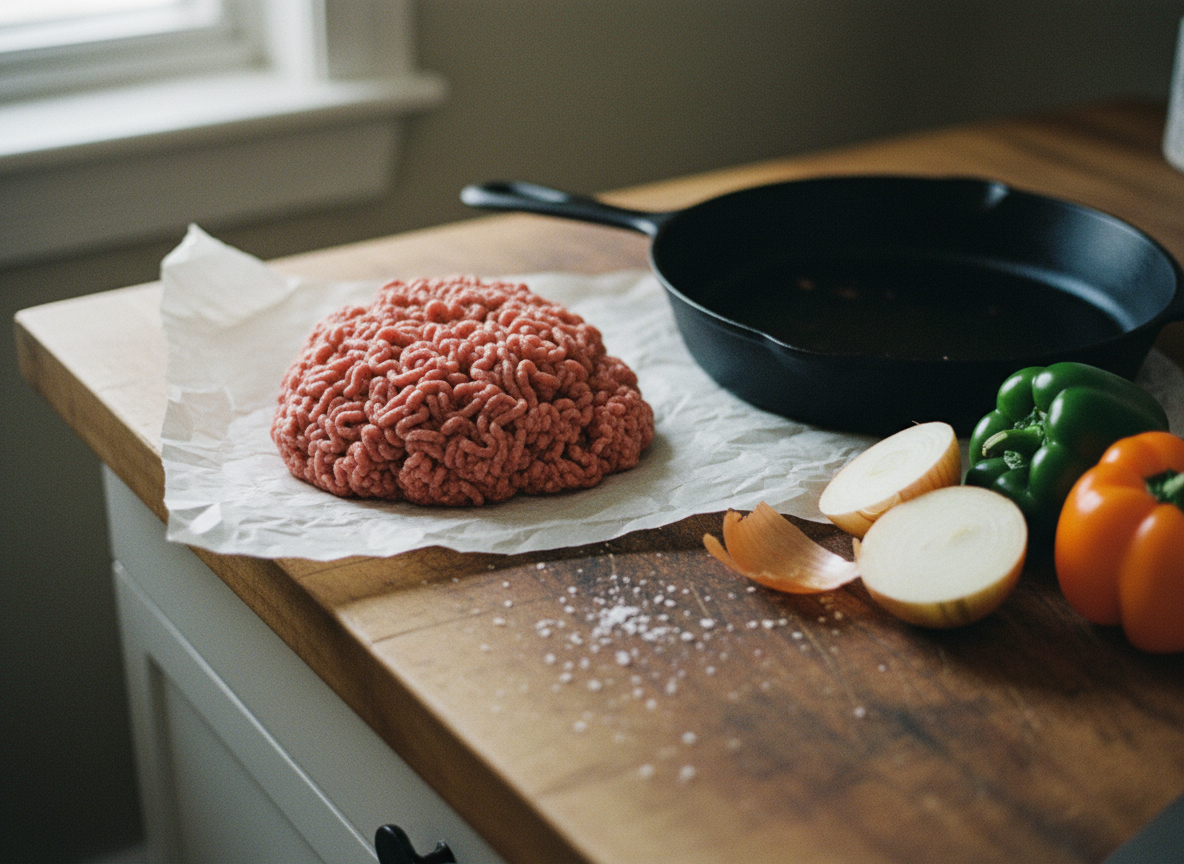
Ground venison recipes are the ones that matter most, because ground is most of what comes home. A Panhandle whitetail yields somewhere around 40 to 60 pounds of usable meat, and once the backstraps and tenderloins are set aside, a good share of the rest gets ground. That’s how people end up in February with a freezer full of one-pound packages and no real plan for them. Below are six recipes that work the first time, plus the two things — fat and heat — that every one of them depends on.
One note on wording before we start: ground venison and ground deer meat are the same thing. Recipes use the terms interchangeably, and so does everyone at deer camp. If you came here searching for ground deer meat recipes, you’re in the right place.
Why Ground Venison Cooks Differently Than Beef
Venison is lean in a way beef isn’t. Ground beef runs 15 to 20 percent fat. Straight ground venison runs closer to two or three. Every complaint people have about wild game — dry, crumbly, livery, tough — traces back to that one number, and so does the fix.
Add fat at the grind. Pork fat is the standard and the best-tasting option, at roughly one pound of fat to four pounds of venison, which lands you near an 80/20 blend. Beef suet works. Bacon ends work and add smoke. If your deer is already ground plain, you can still mix rendered fat or finely ground bacon into the thawed meat before you cook it — it’s not as good as doing it at the grinder, but it’s a lot better than nothing.
If you’re processing your own deer, doing the grinding yourself is where you get control over that ratio. An STX Turboforce 3000 handles a whole deer in an evening and lets you blend fat in as you go instead of accepting whatever a processor decided.
The second half of the fix is heat, and that one has an actual number attached to it.
How Long to Cook Ground Venison
Browning a pound of ground venison in a skillet over medium-high heat takes six to eight minutes, and that is the whole window. Break the meat up as it goes, let some of it sit still long enough to actually sear, and stop as soon as the last of the pink disappears. A hot pan keeps cooking it for another minute after you quit stirring, so the right moment to pull it always feels thirty seconds early.
The comparison that makes it click: ground beef can sit in the pan an extra two or three minutes past done and only gets browner. Ground venison at that same point is already dry. You do not get the margin you’re used to.
On temperature — USDA puts ground meat at 160°F, and ground game is no exception. The grinding that makes it ground is also what spreads surface bacteria all the way through it, which is why ground meat carries a higher number than a whole steak. The safe minimum cooking temperature chart is worth a bookmark if you process your own deer.
And here’s the part people get backwards: the answer to dry venison at 160°F is fat and liquid, not a lower number. Every recipe below gets there a different way — a hard fast sear, a panade, a simmer in sauce — but none of them gets there by undercooking the meat.
Two more timing notes. Thaw it first: a frozen block releases water, drops the pan temperature and steams the meat instead of searing it. And in a braise or a sauce, the six-to-eight-minute rule stops applying entirely — once there’s liquid in the pan, long and slow is working in your favor instead of against you.
Six Ground Venison Recipes That Work
The first three are the ones to learn first. The last three are what you make when you have a lot of ground to get through.
1. Venison Smash Burgers
Smashing is the right technique for venison specifically, because the whole point is a hard sear and a short cook. A thick venison patty cooked slowly is how you get a hockey puck.
Start with a pound of ground venison blended to roughly 80/20 with pork fat or ground chuck. Salt and pepper only — don’t work seasoning through the meat, which makes the texture springy. Divide into four loose balls and don’t compact them.
Get a 12-inch cast iron skillet hot enough that a drop of water skates across it. Lay a ball down, smash it flat with a spatula for about ten seconds, salt the top, and leave it alone for roughly ninety seconds until the edges go brown and lacy. Flip once, add cheese, and pull it off after another forty-five seconds or so. Two thin patties per bun beats one thick one every time.
2. Skillet Venison and Peppers
This is the weeknight one — one pan, twenty-five minutes, and it goes into tortillas, over rice, or onto a baked potato.
Brown a pound of ground venison in a tablespoon of bacon grease or oil, breaking it up but not stirring constantly — you want some of it to actually sear. Pull the meat out when it’s just past pink. In the same pan, cook a diced onion and two diced bell peppers until they soften and pick up some color, six or seven minutes. Add three cloves of minced garlic, a tablespoon of cumin, two teaspoons of chili powder, and a teaspoon of smoked paprika, and let it bloom for thirty seconds. Return the meat, add a half cup of beef broth and a tablespoon of tomato paste, and simmer until it’s barely wet, about five minutes. Salt to taste and finish with lime and cilantro.
Pulling the meat out while the vegetables cook is the step that matters. Leave it in and it sits in vegetable moisture for ten minutes and goes gray and grainy.
3. Venison Breakfast Sausage Patties
Breakfast sausage is the most forgiving thing you can do with ground venison, because the seasoning is doing real work and the fat ratio is higher by design.
To two pounds of ground venison, add a half pound of ground pork or pork fat. Mix in two teaspoons of kosher salt, two teaspoons of rubbed sage, a teaspoon each of black pepper and brown sugar, a half teaspoon of dried thyme, and a half teaspoon of red pepper flakes. Mix with your hands just until combined. Let it sit covered in the refrigerator overnight if you can — the sage needs time to spread through the meat, and same-day sausage tastes noticeably flatter.
Form into patties a little thinner than you think and cook over medium in cast iron, about three minutes a side. Pull them at 160°F internal. This is the one recipe here where a fast instant-read thermometer genuinely earns its keep, because pork in the mix means you want a real number rather than a guess, and thirty seconds past that number is a dry patty.
These freeze well raw with parchment between the patties, which makes a deer worth of sausage a genuinely useful thing to have.
4. Venison Meatballs
Meatballs are where you learn what a panade does, and once you’ve seen it work you’ll use it on everything lean.
To a pound of ground venison add a half pound of ground pork. Tear two slices of white bread into a bowl, pour a third of a cup of milk over them, and mash the whole thing into a paste. That paste is the panade, and it is the entire reason venison meatballs don’t come out like gravel — the starch holds water through the cook that the meat can’t hold on its own.
Add the panade to the meat along with one egg, a quarter cup of grated parmesan, two cloves of minced garlic, a teaspoon of salt and a half teaspoon of pepper. Mix with your hands until it just holds together, no further. Roll into balls about an inch and a half across — bigger than feels right, since they shrink.
Brown them in cast iron over medium-high, turning until every side has color, about six minutes total. They will not be done, and they’re not supposed to be. Drop them into simmering tomato sauce and let them finish in there for twenty minutes. The sauce does the rest of the cooking, and the meatballs come out of it wetter than they went in.
5. Venison Sloppy Joes
This is the lean-meat problem solved by drowning it, and it is the single best thing to make for someone who has told you they don’t like venison.
Brown a pound of ground venison in a tablespoon of oil along with a diced onion. Once the onion softens, add two cloves of minced garlic, two thirds of a cup of ketchup, a tablespoon of brown sugar, a tablespoon of yellow mustard, a tablespoon of Worcestershire sauce and a half cup of beef broth. Simmer fifteen minutes, until it thickens enough to stay on a bun instead of running off it.
It’s also the right home for the coarsest, most sinewy ground in the freezer — the bags from the shoulders and the trim you weren’t sure about. The sauce covers for texture in a way a burger never will.
6. Venison Meatloaf
Meatloaf is where the lean problem gets worst, because it’s a long cook with nowhere to hide. Nearly everything in the ingredient list is there to hold water.
Two pounds of ground venison, a half pound of ground pork, a panade made from three slices of bread and a half cup of milk, two eggs, one grated onion, two cloves of garlic, two teaspoons of salt, a teaspoon of pepper and a tablespoon of Worcestershire. Grate the onion rather than dicing it — it disappears into the mix and gives up its liquid instead of leaving wet pockets.
Shape it free-form on a sheet pan rather than packing it into a loaf pan, which steams the sides instead of browning them. Glaze the top with ketchup and brown sugar. Bake at 350°F until the center reads 160°F, roughly an hour for a two-and-a-half pound loaf, then let it rest fifteen minutes before you cut it or it comes apart on the knife.
Where to Go After These
Once those six are comfortable, the next step is anything braised — venison and beans, a meat sauce that simmers for two hours, venison chili. Braising is the other way around the lean-meat problem: instead of cooking fast to keep moisture in, you cook long and low in liquid so the meat has something to hold onto. A 6-quart enameled dutch oven covers that whole category and holds a full pot of chili for a deer camp.
Storing What You Don’t Cook
Ground meat has more surface area than whole cuts, so it takes on freezer burn faster than anything else in the freezer. Package in one-pound portions — that’s the unit nearly every recipe calls for — and get the air out.
A vacuum sealer is the difference between venison that’s still good next September and venison you throw out in June. Label every package with the date and the cut. In a freezer holding two deer, nobody remembers which bag is which by March.
The Part That Happens Before the Kitchen
Most venison that tastes strong didn’t get that way on the stove. It got that way in the field. A deer that sat warm for three hours in 80-degree September weather is going to taste like something no recipe fixes, and that’s the single most common reason people decide they don’t like venison.
Cooling the meat fast is the whole ballgame, and it starts within minutes of the animal going down — we walked through that in detail in how to field dress a deer. Get that part right and these recipes will do what they’re supposed to. If you’re taking the animal all the way yourself, butchering a deer at home is where you decide how much of it ends up as ground in the first place.
Whether the ground deer meat in your freezer came off a whitetail or a mule deer, it cooks the same way. Mule deer tends to run slightly coarser and a touch stronger in flavor, which the sausage seasoning handles well.
Two Habits Worth Keeping
Add fat, and stop cooking sooner than feels right. Nearly everything people dislike about ground venison comes from skipping one or the other. Get those two habits in place and the recipes mostly take care of themselves.
Leave a Reply