
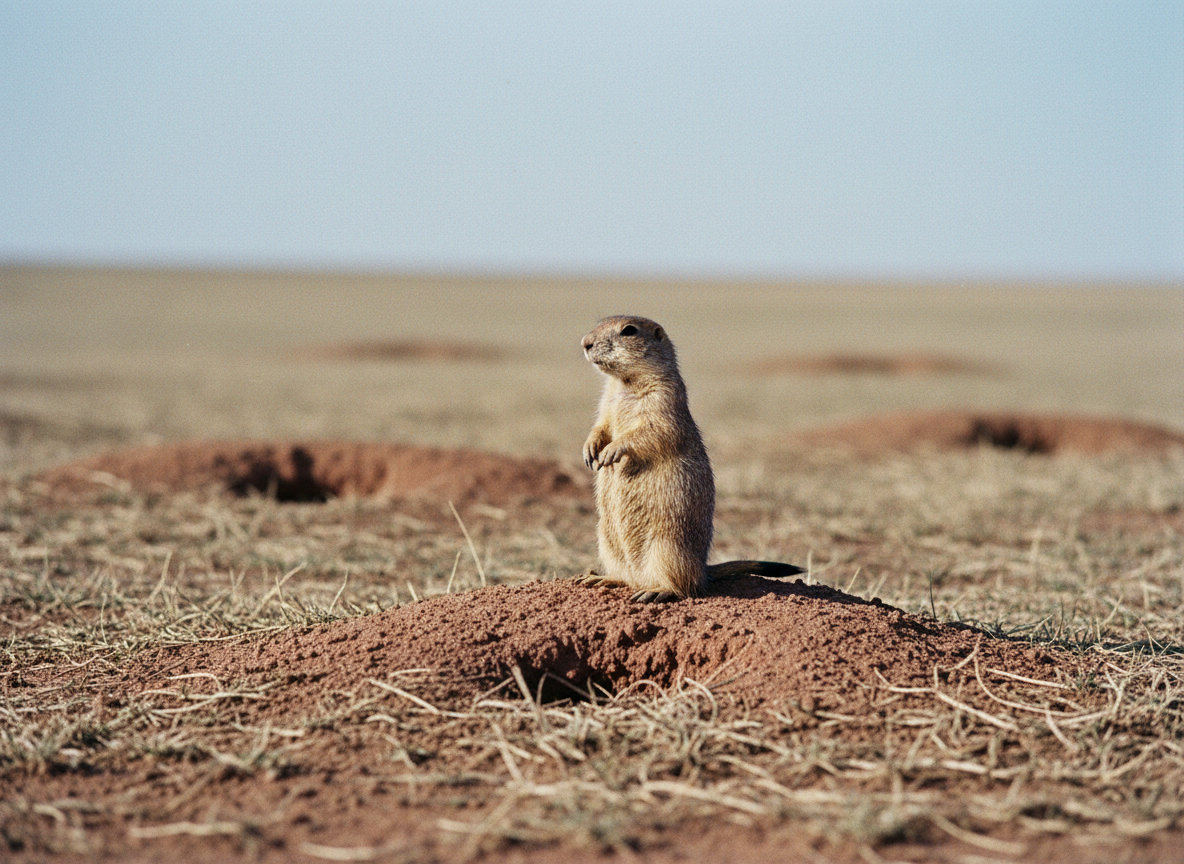
Prairie dogs are legal year-round in Texas, which is exactly why most people get the timing wrong. There’s no season to plan around, so hunters drive out to a town in late July, sit through a hundred-degree afternoon watching heat waves boil across the scope, and go home thinking the shooting was overrated. Knowing when to hunt prairie dogs in Texas is most of the difference between a day of steady shooting and a day of expensive practice. The dogs are there all twelve months. They just aren’t worth shooting at in all twelve.
When to Hunt Prairie Dogs in Texas, Month by Month
March through May is the best window of the year. The dogs come out of their winter lull hungry and spend most of the daylight hours above ground feeding. The short-grass cover around Dalhart, Hereford, and the country north of Amarillo hasn’t grown up yet, so you can actually see the mounds and the dogs standing on them. Temperatures sit in a range where mirage stays manageable most of the day. Pups start showing above ground in late May, which is when town activity peaks and a good town will keep you busy from sunup until the heat pushes them under.
June through August is the hardest stretch, and it’s when most first-timers schedule their trip because school is out. The dogs shift to a crepuscular pattern — out early, back down by mid-morning, out again in the last couple hours of light. In between, they’re underground and you’re sitting in the sun. The larger problem is mirage. On a 95-degree Panhandle afternoon, heat distortion off the ground makes a 300-yard dog look like it’s swimming, and precise holds become guesswork.
September and October are the second good window, and they’re underrated. Temperatures back off, the grass has been grazed or cut down in a lot of the pasture country, and the dogs feed hard ahead of winter. The trade-off is that this is also when deer and bird seasons start pulling attention, so access can get harder to line up on ranches running paid hunts.
November through February is slow. Black-tailed prairie dogs don’t truly hibernate the way some western ground squirrels do, but they go into a deep lull and only come up on warm, calm days. A 60-degree afternoon in January after a stretch of cold can actually produce decent shooting. A 30-degree morning with wind will produce nothing at all.
Why Spring Beats Summer on the Caprock
Three things decide whether a prairie dog day is good: how many dogs are above ground, how well you can see them, and how well you can hold on them. Spring wins all three at once. The dogs are active, the vegetation is short, and the air is still cool enough that the atmosphere between you and a 400-yard target isn’t actively working against you.
Summer wins the first one only on the margins of the day. That’s a real constraint if you’ve driven four hours to get here. Two productive hours in the morning and two in the evening is a fine day if you’re camped on the ranch. It’s a poor return if you’re making a day trip.
Time of Day Matters as Much as Time of Year
Even in the best month, the first three hours after sunrise are the most productive of the day. The ground is cool, the air is settled, and the dogs are up and feeding. Mirage builds as the ground heats, and out here it usually starts costing you real accuracy somewhere between nine and ten in the morning.
The practical approach is to shoot long in the morning and short in the afternoon. Set up for 300 to 500 yards early, then move closer to a different part of the town after lunch and take the 150- to 250-yard shots where mirage matters less. Prairie dogs also get educated fast — a town that’s been shot for two hours will go quiet — so having two or three towns to rotate through does more for your day than any piece of gear.
Wind Is the Real Variable
More hunters get beaten out here by wind than by distance. A 15 to 25 mph crosswind is an ordinary Panhandle afternoon, not an unusual one, and at 400 yards a light varmint bullet can drift well over a foot in it. That’s the entire width of your target and then some.
Two things help. Shoot early, when wind is typically at its lightest. And read the grass between you and the target rather than the flag at your position — the wind at 200 yards downrange is the one that’s moving your bullet, and on open country it’s often doing something different than the wind on your face.
What Actually Matters in Your Kit
Prairie dog shooting is a volume game, which changes what gear is worth spending on. A .22 LR is fine inside 100 yards and cheap enough to shoot all day. A .17 HMR stretches that to roughly 150. Past that, a .223 Remington, .204 Ruger, or .22-250 is what most people end up carrying, with the .22-250 being the standard answer for the long shots this country offers. Barrel heat is the limiting factor on all of them — bring two rifles or plan to let one cool.
A solid rest matters more than another hundred dollars of scope. A Harris S-BRM bipod with notched legs is the default for good reason: it sets up on uneven caliche and prairie sod without fighting you, and the swivel lets you level the rifle on ground that’s never as flat as it looks.
You’ll be prone on ground covered in goatheads, cactus, and fire ants, so a padded shooting mat earns its place fast. A spotting scope earns its place too, though for a different reason — someone calling your misses is worth more than any correction you’ll make on your own. A Vortex Diamondback HD 20-60×85 has enough glass to read impacts in dust at long range without costing what a premium spotter does.
Hearing protection is the one people skip and regret. A few hundred rounds out of a .22-250 in open country is a lot more punishment than it feels like at the time. Howard Leight Impact Sport muffs let you keep talking to your spotter between shots instead of pulling plugs in and out all day. The rest of what’s worth keeping in the truck is on the Recommended Gear page.
One thing worth planning for that isn’t gear: ammunition volume. A good day is several hundred rounds, and factory varmint ammo in the popular chamberings is not something you want to be buying the morning of.
Lining Up Access
Prairie dog towns sit on private ranchland, and access is the part that takes the most lead time. Ranchers generally want the dogs thinned — towns compete with cattle for grass and the burrows are a genuine hazard to horses and equipment — but they want to know who’s shooting and when. Spring is also when a lot of operations are calving, which is a real consideration for access even though it’s the best shooting of the year. Ask early, be specific about dates, and don’t show up with more people than you said.
If you don’t already have a rancher’s phone number, the county extension agent is the best first call — prairie dog control is something they field questions about constantly, and they know which operations are looking for help. Feed stores and equipment dealers in Dalhart, Hereford, and Dumas are the other reliable starting point. Landowners talk to those people every week.
The Short Answer
If you can pick any week of the year, take late April or early May and plan to be set up and shooting by first light. If spring won’t work, take late September or early October. And whatever month you land on, check the forecast for wind before you commit to the drive — a calm day in a mediocre month beats a 25 mph day in a good one.
Leave a Reply