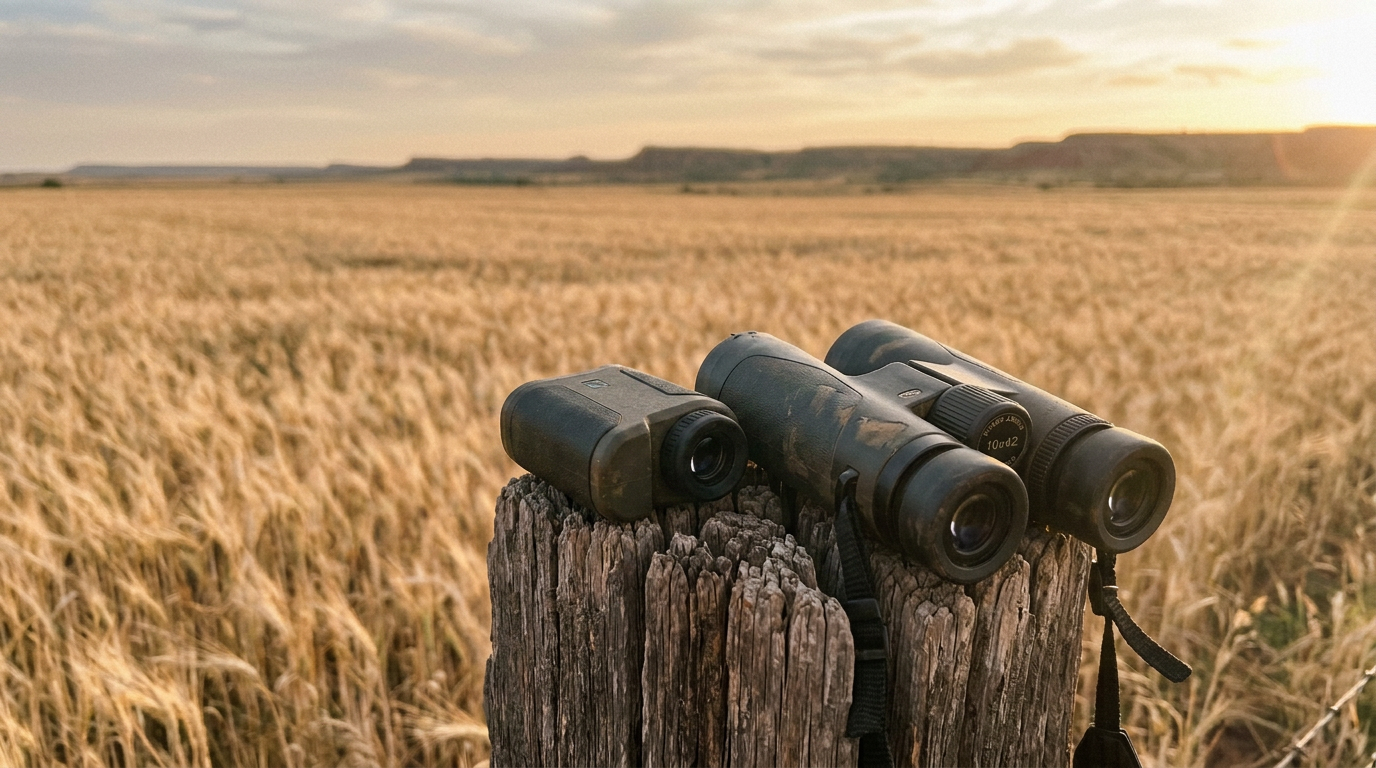
Bowhunting the Panhandle isn’t timber hunting with a different weapon. Trees are scarce enough that a lot of hunters run ground blinds instead of stands, wind is a constant instead of an occasional problem, and the deer you’re drawing back on tend to run heavy-bodied and thick-shouldered. None of that changes what a compound bow does, but it changes which setups are worth buying. Here’s what actually holds up on this ground — the compound bows and broadheads worth trusting for Texas whitetail, real market availability included.

What Panhandle Conditions Ask of a Bow
Three things matter more here than they would in thick Eastern timber. First, a flatter, faster arrow forgives the yardage-guessing that comes with open-country shots — even with a good rangefinder, a moving deer at 40 yards leaves less room for error than one at 20. Second, a shorter axle-to-axle length matters if you’re hunting a ground blind, where a long bow gets awkward to draw through a window. Third, wind changes a bowhunt in ways it doesn’t change a rifle hunt — not the arrow’s flight so much as your ability to sit still and draw undetected when brush is already moving on its own.
A quick note before the picks below: the top-tier bow brands sell through authorized pro shops only, not through Amazon, the same way Amazon doesn’t sell firearms. We’re not going to pretend otherwise or link you to a search page dressed up as a product page. Where we can’t link a specific bow, we’ll still tell you straight whether it’s worth your money — that’s worth more than a link that doesn’t go anywhere real.
Best Overall: Hoyt Alpha AX-3 33
The Hoyt Alpha AX-3 33 holds and aims about as well as any bow on the market right now, which matters more on a long Panhandle sit than raw speed does. At 70 lbs it’s pushing 285 fps, plenty flat for the 20 to 40 yard shots that make up most whitetail encounters out here, and the draw cycle stays smooth enough to hold at full draw while a buck works his way down a fence line. Hoyt sells this one through authorized dealers only — check with a local pro shop or an outfitter like Lancaster Archery for current pricing.
Best for Ground Blinds: Mathews ARC 30
With a 30-inch axle-to-axle length, the Mathews ARC 30 is built for exactly the tight-quarters draw that a ground blind demands, without giving up speed — it’s actually one of the faster bows in this lineup at 295 fps. If most of your Panhandle hunting happens from a blind on a fence line or field edge rather than a treestand in a draw, this is the more practical bow of the two. Like the Hoyt, it’s a dealer-only bow — not something you’ll find with an Amazon listing.
Best for Flat, Windy Ground: PSE Sicario
When the wind is up — and on this ground, it usually is — a flatter-shooting setup buys back some of the margin a crosswind takes away. The PSE Sicario is the fastest bow in this lineup at 306 fps, generating well over 90 foot-pounds of kinetic energy, which also means plenty of authority on a big-bodied Panhandle buck at typical bow range. Same story on availability — this is a specialty-dealer bow, not an Amazon one.
Want to Order Today? Bear Archery Royale
If you’d rather order tonight and have a bow on your doorstep than make a pro-shop trip, the Bear Archery Royale is a legitimate option and one of the few complete hunting-ready packages actually sold on Amazon. It ships as a full ready-to-hunt package — sight, rest, quiver, and stabilizer included — with an adjustable draw weight and length that make it forgiving for a first bow or a backup setup. It won’t match the AX-3 or the ARC 30 for pure performance, but it’s real, it’s in stock, and it’ll get a beginner or a second hunter in your camp shooting a tuned setup without a dealer visit.
Broadheads: Match the Blade to the Deer
Panhandle whitetail run big-bodied, and a broadhead that has to punch through more muscle and a heavier shoulder needs to prioritize penetration over a huge wound channel. That’s a fixed-blade argument more than a mechanical one, though a well-built mechanical still has a place if your bow is tuned well and you’re confident in shot placement.
- Best Fixed Blade: Iron Will S100 — A2 tool steel construction and the lowest push force of any broadhead tested by major outdoor publications this year. Built to drive through heavy shoulder muscle without losing momentum, which is exactly the problem a mature Panhandle buck presents. Iron Will sells direct and through specialty archery shops rather than Amazon.
- Best Mechanical: Rage Hypodermic NC — A hybrid tip that punches through bone like a chisel while the leading edge cuts on contact, deploying to a 2-inch cutting diameter on impact. One of the most proven mechanicals on the market, and a strong choice if your setup is well tuned and you’re taking broadside or quartering-away shots rather than punching through a shoulder.
- Best Budget: Magnus Black Hornet — Around $40 and still produces a wound channel close to two inches. A legitimate option if you’re outfitting more than one bow or don’t want to spend premium money to find out what shoots best from your setup. Sold through archery specialty retailers rather than Amazon.
Tuning Compound Bows and Broadheads Before the Season
No broadhead fixes a bow that isn’t tuned. Shoot your broadheads — not just field points — from actual hunting distance before the season, and watch for any lateral drift compared to your field-point groups. A fixed blade will expose a tuning problem that a field point hides completely, and finding that out in your backyard beats finding it out on a blood trail. Once you’re confident in the setup, the rest of your kit — rangefinder, optics, boots — is worth checking against the full Recommended Gear list before archery season opens on the Panhandle whitetail ground you hunt.