
Most bowhunters lose their season in September, not October — they just don’t find out until opening day. A Panhandle whitetail’s movement shifts hard in the weeks before archery season opens, as bucks drop their summer feeding routines and start easing toward the cover they’ll use once pressure hits. If you’re still hunting off a trail-cam pattern from July, you’re already behind. Here’s how to pattern whitetail deer on the Panhandle before the season starts, not after.

Why the Summer Pattern Breaks Down
All summer, bucks run in loose bachelor groups and key on the easiest calories around — ag fields, food plots, whatever’s green. That pattern holds until velvet starts peeling in late August and early September. Once it does, bachelor groups break up, testosterone climbs, and bucks start favoring security cover over open feed. The deer you’ve been watching on a wheat field edge all summer can disappear into a cedar draw almost overnight, and a trail-cam card full of July photos tells you nothing about where he’ll be in three weeks.
Shortening daylight matters here too. As days get shorter heading into September, deer shift more of their movement toward dawn and dusk and tighten up their core area. A buck that ranged widely across open whitetail country in June often settles into a much smaller piece of ground by the time archery season opens — usually built around a specific draw, a cedar pocket, or a bend in a fence line he can move through without crossing open ground.
Read the Terrain First, Cameras Second
On this ground, the terrain tells you more than a camera card ever will. Look for the pinch points: places where a cedar or mesquite draw narrows against a wheat or milo field, or where two cuts come together before opening into ag ground. Deer use these funnels because they offer cover most of the way to the food, and they’re the same funnels that hold up year after year regardless of what any individual buck is doing that season.
Staging areas matter as much as the funnels themselves. Look thirty to eighty yards back into cover from a field edge for the beat-down ground, rubs, and early scrapes where bucks wait for last light before committing to open feed. That staging cover is where an evening bow hunt actually happens — not out on the field edge itself, where a mature buck won’t show until it’s nearly too dark to shoot.
Using Trail Cameras to Pattern Whitetail Deer Without Guessing
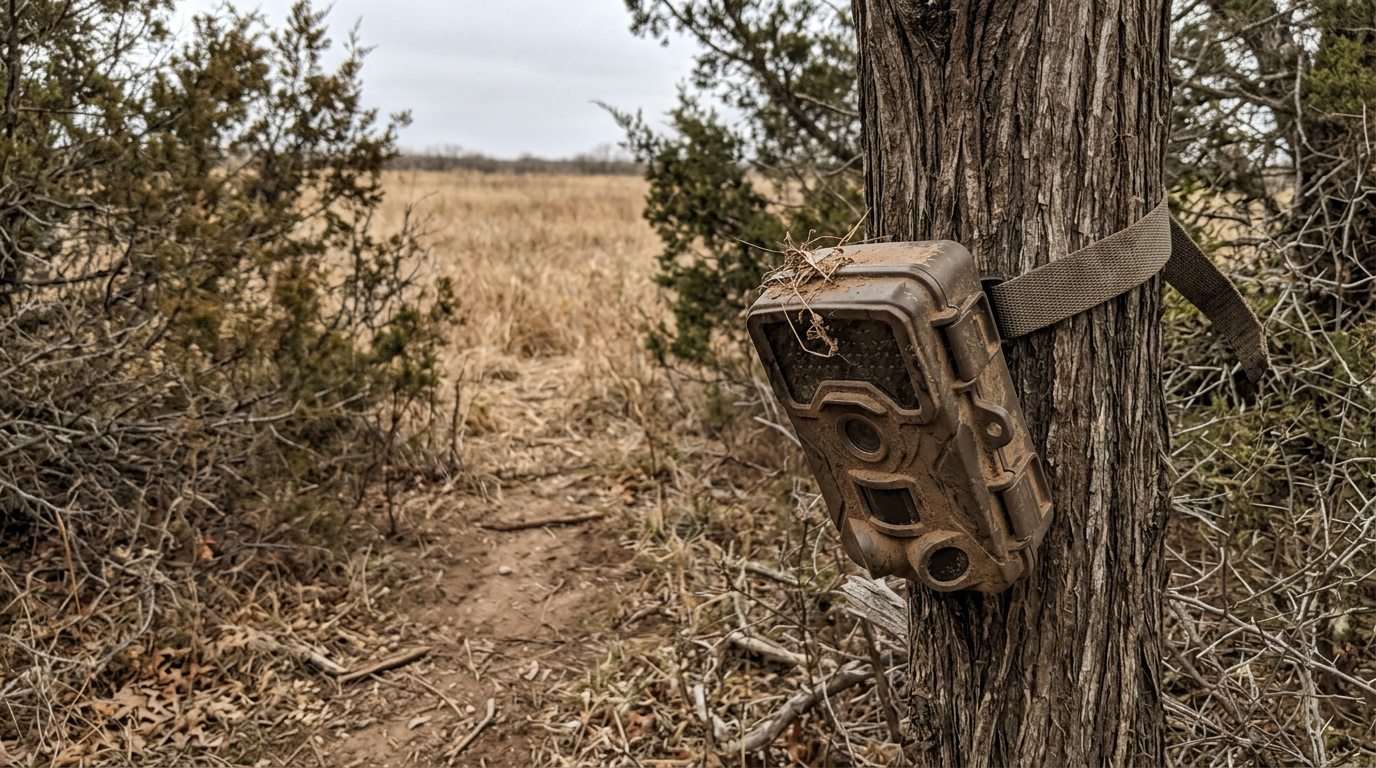
Once you’ve picked funnels and staging areas off the terrain, cameras earn their keep confirming what’s actually using them. Hang cameras on the funnel itself rather than out on the field, and check them as infrequently as you can stand to — every trip in is a chance to leave scent and educate the exact deer you’re trying to pattern. A cellular unit like the Moultrie Edge 4 Solar solves this problem outright — it sends photos to your phone so you never have to walk in and check a card, which on this ground is the difference between a spot staying fresh through opening week and getting blown out before archery season even starts.
Setting Your Stand Without Burning the Spot
Hang your stand or set your blind as close to opening day as you reasonably can, and always with the wind in mind on the walk in as much as the sit itself. A staging area that’s held deer all September can go quiet in two days if your entry route pushes scent across the same cover the deer are using to approach it. Cut a low-impact entry path that keeps you downwind of the funnel, not just downwind of where you expect the shot.
Stay Willing to Move
A pattern built in late August is a working theory, not a guarantee. Bucks keep adjusting right up through the opener, and a hot week or an early cold front can shift movement again before you ever draw your bow. Treat your first sit as more information, not a final answer — if the deer aren’t moving where the sign said they would, trust what you saw with your own eyes over what the trail-cam pattern predicted, and be ready to shift a hundred yards down the same draw rather than starting over completely.
Leave a Reply