
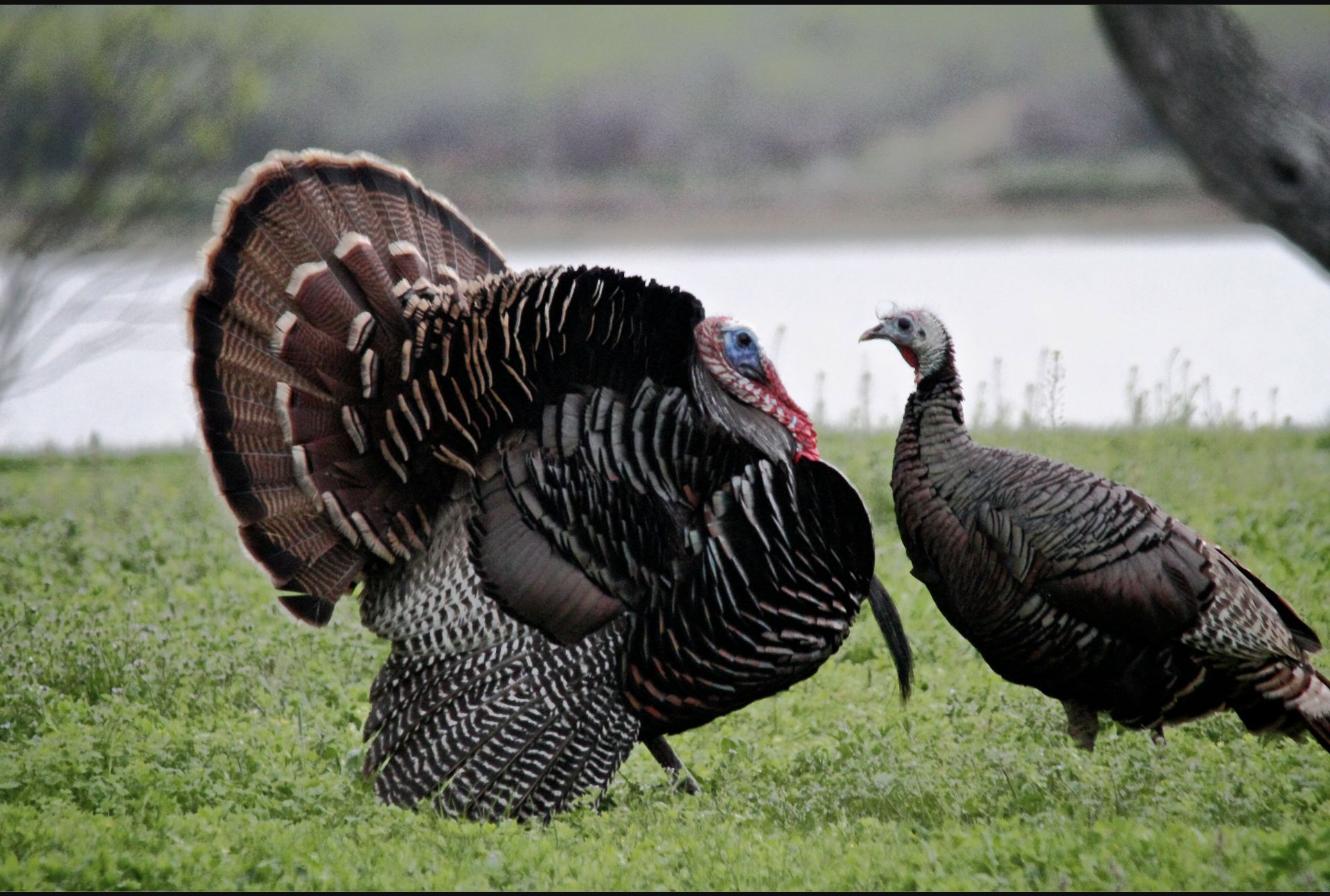
A Rio Grande gobbler hammering off a cottonwood roost along the Canadian River breaks sends a jolt through camp before the sun ever clears the horizon. Texas holds more wild turkeys than nearly any other state, and a large share of that population lives in country most out-of-state hunters never think to look — the river bottoms, mesquite flats, and canyon country of the Texas Panhandle. If you’re trying to figure out where, when, and how to hunt turkey in Texas, Rio Grande turkey hunting in the Panhandle is one of the most overlooked, most huntable options in the state.

Rio Grande Turkey Hunting: Where the Birds Live in Texas
Most people picture turkey hunting as an Eastern-bird pursuit — thick timber, tight cover, birds that hang up in the brush and never show themselves. Rio Grande turkeys, the subspecies that dominates Texas outside the Pineywoods, live a completely different life. In the Panhandle, Rios roost in big cottonwoods along the Canadian and Red River drainages, then travel miles on foot through mesquite flats, wheat, and CRP to feed and breed. They move in visible lines across open country and lean on eyesight, not thick brush, to stay safe. That open-country behavior is exactly why the Panhandle produces some of the most consistent gobbling action in the state, once you understand how these birds actually move through a day.
When Texas Turkey Season Opens
Spring is the season that matters here, and spring 2027 in the North Zone runs April 3 through May 16. Peak action in the Panhandle typically falls in April, as hens start breeding and toms are still grouped up and vocal on the roost. Dates shift slightly year to year and by county, so check our season dates roundup before you plan a hunt. Fall turkey opportunity in this part of the state is limited to specific counties, so if a Rio Grande gobbler is the target, spring is when to be in the field.
Weather matters more than most first-timers expect. A hard cold front rolling through the Panhandle in early spring can shut gobbling down for a day or two even at the peak of the breeding cycle — toms still move, they just go quiet about it. Build a few extra days into a spring trip if you can, and pack layers. Forty-degree mornings that climb into the seventies by early afternoon are normal out here in April.
Public Land and Private Access for Texas Turkey Hunting
This is where a lot of hunters searching for a Texas turkey hunt run into a wall. Almost all of this state is privately owned, and that ratio is even more lopsided in the Panhandle, where the river-bottom and canyon country turkeys prefer sits almost entirely inside working ranches. Access is the hard part of turkey hunting here — harder than the calling, the setup, or the shooting.
The cheapest real access in the state is the Annual Public Hunting Permit — most hunters just call it the walk-in permit. It opens up nearly a million acres across more than 180 areas, turkey is on the species list, and there is no drawing and no application window. Buy it and go. The catch is that every other permit holder can hunt the same ground, and pressure is real on units within easy reach of the big metros. Panhandle units see far less of it. Get the permit and the map booklet, then scout on a weekday before you hunt a weekend.
TPWD also runs a public hunt drawing for supervised hunts on wildlife management areas, with separate adult and youth categories. Odds on turkey categories are better than most people assume, because far fewer hunters apply for turkey than for deer, and the application fee is small. It is worth applying in a year you expect not to draw, because the only cost of losing is the fee.
The other route is a lease or a day-hunt arrangement with a landowner directly. Ranchers in this country tend to be more approachable about turkey than about deer, since turkey hunting does less to disturb a deer program they may be selling. Ask in the fall or winter for the following spring, be specific about your dates and how many people are coming, and expect to pay a day rate. We’ve guided hunters through this country for 27 years, and the pattern held every season: the hunters who got on good ground asked early and asked politely. The ones who started calling around in March got nothing.
A written lease raises the question of liability before the season does, and it is better settled before you sign than after. The American Hunting Lease Association sells liability coverage built specifically for hunting leases, covering both the hunters on the lease and the landowner. Read what your own lease says about insurance, then decide who is carrying it.
The lease insurance link above is an affiliate link — we may earn a referral fee if you buy a policy, at no additional cost to you. We are not insurance agents and this is not insurance advice. See our affiliate disclosure.
However you end up on the ground, the same principles apply: locate the roost first, then work backward from there instead of walking in blind on opening morning.
What It Takes to Kill a Rio Grande Tom
The short version: find the roost, learn the exit line, and don’t over-call a bird that’s already headed your way. Rios pattern hard around three things — roost, water, and feed — and the daily loop between them repeats more than most hunters expect. Set up along a travel route rather than directly under the roost tree, start aggressive early to pull a vocal tom off a group, then back off to soft clucks and purrs once he’s committed. Our full Rio Grande turkey hunting guide breaks down roost-reading, calling, and decoy tactics in more depth if you want to go deeper before opening morning.
Gear matters more in open country than it does in timber. A shotgun patterned for range and wind covers the 40-yard-plus shots that river-bottom and field-edge setups tend to produce. A Mossberg 500 Turkey paired with a Carlson’s Long Beard turkey choke handles that job without needing to upgrade to anything exotic — just match the tube to your gun’s threads, since Carlson’s makes it in several fitments.
Snake boots aren’t optional once the weather warms up, either. Rattlesnakes are active by the time Rio season peaks, and a pair of LaCrosse Venom boots gives you real protection without slowing down the miles of walking a Panhandle turkey hunt actually takes between roosts, water, and glassing knobs. The Venom runs narrow through the calf, so try a pair on over the socks you actually hunt in.
Worth the Trip
Rio Grande turkey hunting in Texas doesn’t get talked about the way trophy whitetail or mule deer hunting does, but the birds are here in real numbers, and the Panhandle’s river country holds some of the most consistent gobbling action in the state for hunters willing to look past the Hill Country’s reputation as the state’s turkey capital. Scout the roost, respect the terrain, and let a tom finish the hunt the way he wants to finish it — on his own line, in his own time. Check the full Recommended Gear list for the rest of the kit that holds up out here.
Leave a Reply